
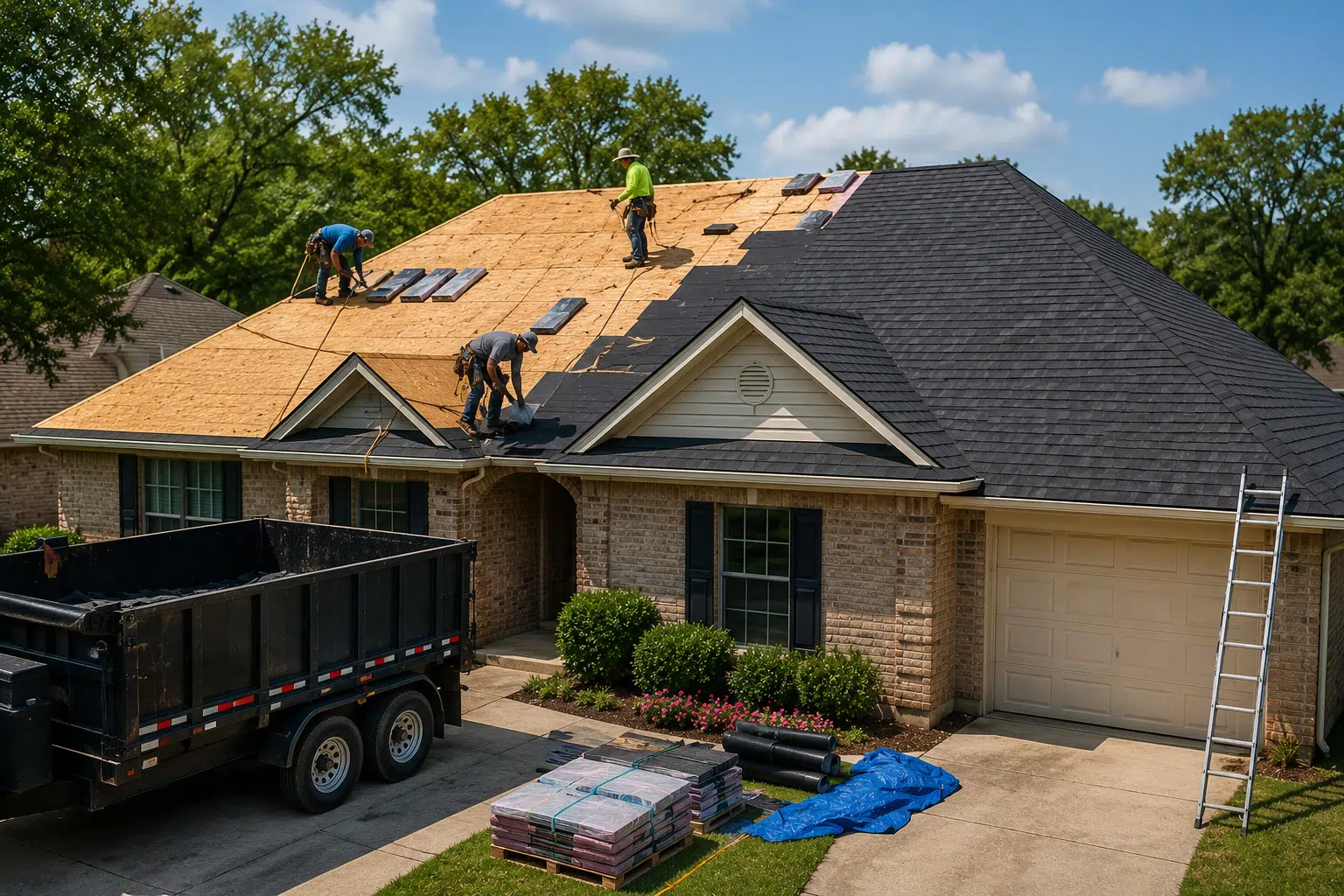
How to File a Roof Insurance Claim in Texas: A Step-by-Step Guide for Homeowners in 2026
Filing a roof insurance claim in Texas can feel overwhelming, especially after a major storm rolls through East Texas. At Roof Ryders, we’ve helped homeowners and business owners in Lufkin and the surrounding area handle this process for over nine years. Our owner, Justin Schlichter, holds a Professional Home Inspector License from the State of Texas (TREC #21950), and we’ve seen firsthand how the right steps, taken in the right order, can make or break a claim.
This guide walks you through how to file a roof insurance claim in Texas, from understanding your policy to avoiding the mistakes that cost homeowners thousands of dollars.
What Your Texas Homeowners Policy Covers (and What It Doesn’t)
Most Texas homeowners insurance policies cover roof damage caused by storms, hail, wind, and falling objects. These are considered sudden, accidental events. Your policy will pay for repairs or replacement under one of two valuation methods: replacement cost value (RCV) or actual cash value (ACV).
RCV pays the full cost to replace your roof minus your deductible. ACV deducts depreciation based on the age and condition of your roof before issuing payment. The difference matters, a lot. A 15-year-old architectural shingle roof could see thousands of dollars withheld under an ACV policy.
Here’s what your policy almost certainly won’t cover:
- Normal wear and tear or age-related deterioration
- Damage caused by neglect or poor maintenance
- Flood damage (requires separate flood insurance)
Under the Texas Insurance Code, you must file your claim within one year of the date of loss. Miss that window, and your insurer can deny the claim outright. We always recommend reviewing your declarations page before storm season so you know exactly what kind of coverage you carry.
Documenting Roof Damage Before You File
Good documentation is the foundation of a successful roof insurance claim in Texas. Before you call your insurance company, gather as much evidence as possible.
Start with clear photos and videos from multiple angles. Capture damage from the ground and, if you can safely access the roof, from above. Focus on hail dents on shingles, vents, and gutters. Photograph missing or cracked shingles, exposed underlayment, and any water stains on interior ceilings.
Write down the date and approximate time of the storm. Save weather reports or hail data from the National Weather Service for your area. These details help establish the cause and timeline of damage.
Next, schedule a professional roof inspection. At Roof Ryders, we provide documented inspection reports that detail every area of damage with photos and measurements. Justin’s background as a licensed home inspector means our reports hold up during the claims process.
Texas law (Tex. Ins. Code §542.055) requires insurers to acknowledge your claim within 15 days and begin their investigation within 30 days. Having your evidence organized before you file puts you ahead of those timelines and strengthens your position from day one.
How to File Your Claim and What to Expect From the Adjuster
The homeowner must file the claim, not the contractor. This is a critical distinction. You can file by calling your insurance company’s 24/7 claims line, through their website or app, or by contacting your local agent directly. Have your policy number, storm date, and damage documentation ready.
Once filed, your insurer will assign an adjuster. This may be a company adjuster or an independent adjuster hired by the insurer. The adjuster will schedule an on-site inspection of your roof.
Be present during the adjuster’s visit. Walk the property with them. Point out every area of damage you’ve documented. If your roofing contractor can attend, even better. We regularly accompany our Lufkin-area clients during adjuster inspections to make sure nothing gets overlooked.
After the inspection, the adjuster creates an estimate called an Estimated Cost of Repair (ECR). This document outlines what the insurance company is willing to pay. Review it carefully, adjusters sometimes miss damage or undervalue repairs. If the ECR doesn’t match the actual scope of work, your contractor can submit a supplement request to your insurer.
Reviewing Your Settlement: ACV, Depreciation, and Replacement Cost
If your policy uses replacement cost value, you’ll typically receive your settlement in two checks. The first check reflects the ACV, the depreciated value of your roof minus your deductible. The second check, called the recoverable depreciation, is issued after you complete repairs.
For example, if your roof replacement costs $18,000 and depreciation is $4,000 with a $2,500 deductible, your first check would be $11,500. After repairs are finished, you’d receive the remaining $4,000.
Review the ECR line by line. Check that material costs, labor rates, and quantities reflect fair market pricing for your area. East Texas material and labor costs can differ from statewide averages, so generic pricing may shortchange your claim.
If the settlement seems low, don’t accept it without question. Your contractor can prepare a supplement with detailed line items showing the actual cost of repairs. We do this regularly for our clients, supplements are a normal part of the process, not a confrontation. The Texas Department of Insurance (TDI) also allows you to file a complaint if your insurer acts in bad faith or unreasonably delays payment.
Common Mistakes That Can Derail Your Texas Roof Claim
We’ve seen homeowners lose valid claims because of avoidable errors. Here are the most common ones:
Waiting too long to report damage. Texas gives you one year, but delays give insurers reason to argue the damage worsened due to neglect. File promptly after any storm event.
Poor or incomplete documentation. A few blurry photos won’t hold up against an adjuster’s report. Thorough, timestamped evidence is essential.
Letting a contractor file the claim for you. Texas law requires the policyholder to initiate the claim. A contractor who offers to “handle everything” may be crossing legal lines.
Signing incomplete or vague estimates. Always review the full scope of work before signing anything. Make sure every damaged component is accounted for.
Ignoring your policy details. Know your deductible, your coverage type (ACV vs. RCV), and any endorsements or exclusions. We’ve met homeowners who didn’t realize they had a percentage-based wind/hail deductible instead of a flat dollar amount, it changed their out-of-pocket cost significantly.
When to Bring in a Professional Roofing Contractor in Lufkin, TX
Bring in a roofing contractor before you file your claim, not after. A professional inspection gives you a clear picture of the damage and a documented report to support your filing.
At Roof Ryders, we inspect the roof, prepare a detailed damage report, and walk our clients through the claims process step by step. When the adjuster arrives, we’re there to make sure the inspection is thorough. If the settlement comes back short, we handle the supplement paperwork.
Justin Schlichter’s experience as a former project manager for a custom home builder in the Houston area, combined with over nine years of roofing work in Lufkin and Jasper, gives our team a deep understanding of both construction standards and the insurance process.
The Texas Department of Insurance advises homeowners to work with licensed contractors for all roof repairs. We hold the credentials and local track record to back up our work. If you’ve experienced storm damage, call us at 936-225-5571 or visit us at 3213 S Medford Dr #316, Lufkin, TX 75901. We’ll get your roof inspected and help you file your roof insurance claim the right way.
File Smart, Protect Your Home, and Get the Settlement You Deserve
A successful roof insurance claim in Texas comes down to three things: timely filing, solid documentation, and a fair settlement review. Don’t leave money on the table by skipping steps or going through the process alone.
If you’re dealing with storm damage in the Lufkin area, Roof Ryders is here to help. We’ve guided hundreds of homeowners through the claims process, and we’ll do the same for you. For disputes, the Texas Department of Insurance is your resource for filing complaints and understanding your rights.


