
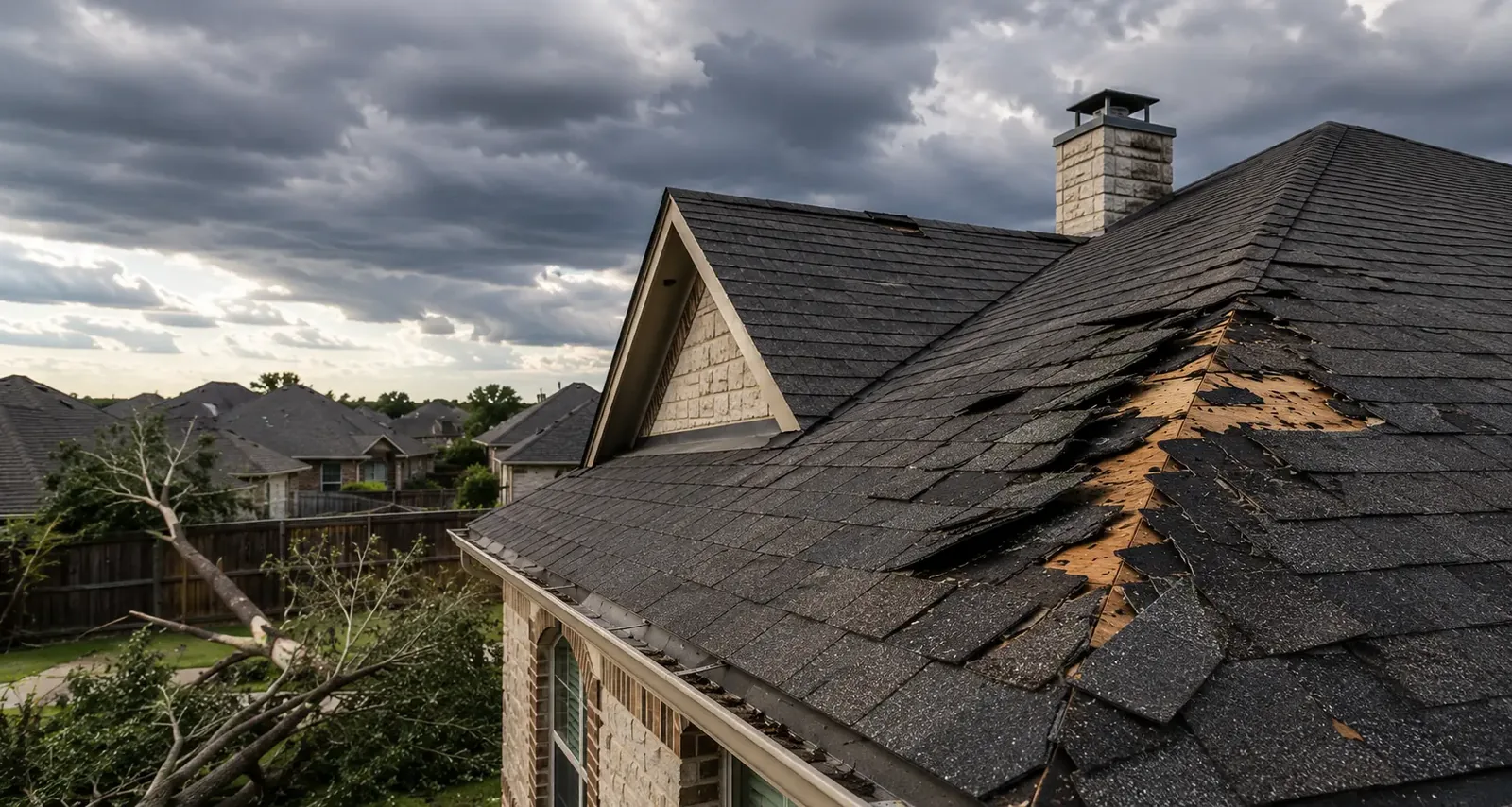
Wind damage to a roof in Texas can quickly turn into a costly insurance battle if you don't act fast. At Roof Ryders, we've spent over nine years helping property owners across the Lufkin area assess storm damage, file claims, and rebuild stronger roofs.
Texas windstorms hit roofs hard. Knowing how to spot damage early can mean the difference between a fully covered repair and an out-of-pocket headache. Here's our practical guide to identifying wind damage, understanding your coverage, and winning your claim in 2026.
How Texas Wind Storms Damage Your Roof
High winds tear off shingles, loosen or bend metal panels, and break the seals and flashing that keep water out. Once those barriers fail, wind drives rain underneath the roofing system.
Debris adds another layer of risk. Flying branches and loose objects can puncture shingles, dent metal trim, and crack vents. Even when the visible damage looks minor, the real problem is what happens next: water sneaks into the gaps and causes leaks and structural decay over time.
In East Texas, we see this pattern after nearly every major storm front. A roof that seems fine from the curb may have compromised seals that won't show their weakness until the next heavy rain. That's why a professional inspection after a windstorm matters so much.
Common Signs of Wind Damage on a Roof
The most common signs of wind damage on a roof include missing, cracked, or creased shingles, especially along edges and ridges. You may also notice shingles that lift or won't lie flat, dented metal panels, and damaged flashing around chimneys, vents, and skylights.
Another telltale sign is granule loss on asphalt shingles. When you see bald or dark patches, the protective layer is wearing away, which shortens the life of your roof and invites leaks. Catching these signs early helps your wind damage roof claim move faster.
Visible Exterior Damage to Watch For
Walk your property after a storm and look for shingles on the ground or in your gutters. Exposed underlayment or decking is a clear warning sign, as are dents on vents, gutters, and metal trim, which often come from wind-driven hail.
Also check for loose or detached gutters and downspouts, fallen limbs, and impact marks on the roof surface. These details document the storm's force and strengthen your claim.
Interior Warning Signs You Shouldn't Ignore
Inside your home, new water stains on ceilings or walls signal a breach in the roof. Peeling paint, bubbling drywall, and warped trim point to moisture that's already inside the structure.
Climb into the attic and look for damp insulation or daylight coming through the decking. A musty odor usually means hidden moisture is doing damage you can't yet see.
Does Texas Homeowners Insurance Cover Wind Damage?
Yes, most Texas homeowners policies cover sudden wind and hail damage to roofs, subject to your deductible and policy exclusions. This is good news for property owners, but the details matter.
Many Texas policies carry a separate wind and hail deductible, which is often higher than your standard deductible and calculated as a percentage of your home's insured value. Read your policy carefully, so you know what you'll owe before repairs begin.
Keep in mind that insurers typically exclude damage from wear and tear or old age. If your roof was already failing before the storm, an adjuster may deny part or all of your claim. The Texas Department of Insurance offers clear guidance on how wind and hail coverage works statewide.
How to File a Wind Damage Roof Claim Step by Step
Start by documenting all damage with photos and video, covering the roof, exterior, and interior.
Next, prevent further damage with tarps or temporary repairs, and save every receipt. Then review your policy for wind and hail coverage and deductibles.
- Contact your insurer promptly and open a claim.
- Get a professional roof inspection and written estimates from a licensed, local Texas contractor.
- Attend the adjuster inspection and share your documentation.
- Compare the settlement to your contractor estimates and negotiate if it's too low.
- Approve repairs and keep all invoices, photos, and completion documents.
We help Lufkin-area property owners through every one of these steps, from the first inspection to the final repair.
Tips to Maximize Your Insurance Payout
To maximize your insurance payout, document all damage thoroughly before you make any temporary repairs. Photos taken right after the storm carry the most weight with an adjuster.
Get two or three independent contractor estimates instead of relying only on the insurer's figure. Don't accept the first offer without comparing it against your policy and those estimates. A low initial settlement is common, and you have the right to push back with evidence.
Be cautious with storm-chasers and high-pressure contractors who appear right after a storm. Always verify Texas licensing, and avoid anyone offering to "waive" your deductible, which is illegal in Texas. Keep a written record of every conversation with your insurer and contractor. If your claim is unfairly underpaid or denied, a Texas property damage attorney can help.
Serving both residential and commercial customers across Lufkin and Jasper, our team brings a trained eye to every claim, so nothing gets missed.
Protect Your Roof and Your Claim With a Trusted East Texas Team
Wind damage doesn't wait, and neither should you. Acting quickly to document damage, understand your coverage, and bring in a licensed inspector protects both your roof and your claim.
Roof Ryders has served the greater Lufkin area for over nine years, handling everything from emergency tarping to full shingle and metal replacements. Call us at 936-225-5571 or callroofryders.com to schedule your storm inspection.