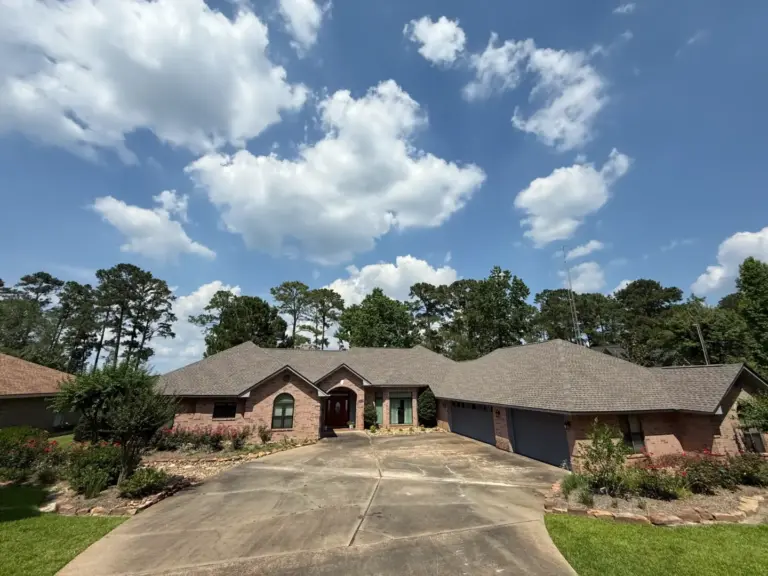

Flat Roof vs. Pitched Roof for East Texas Commercial Buildings
Choosing between a flat roof and a pitched roof is one of the most important decisions you’ll make for your home or commercial building. Each style has clear advantages and trade-offs in cost, durability, and maintenance. At Roof Ryders, we’ve spent over nine years helping property owners across the greater Lufkin, TX area make this exact decision. Whether you’re building new or replacing an aging roof, understanding how these two roof types compare will help you invest wisely. Here’s what we want every homeowner and business owner to know before picking a roofing system in 2026.
What Defines a Flat Roof and a Pitched Roof
A flat roof is not completely flat. It has a slight slope of 1 to 3 degrees, just enough to direct water toward drains or scuppers. Flat roofs use membrane systems like TPO, PVC, or EPDM rubber to create a watertight seal. You’ll see them most often on commercial buildings, but they’ve become popular on modern residential designs too.
A pitched roof has a steeper slope and relies on gravity to shed rain and debris. Common pitched roof styles include gable, hip, and A-frame designs. Materials range from asphalt shingles and clay tiles to standing seam metal panels. Most traditional homes across East Texas use some form of pitched roof.
The core difference comes down to slope and drainage method. A flat roof holds water briefly and relies on membranes and drains. A pitched roof moves water off the surface quickly through its angle and overlapping materials. Both can perform well, but each suits different building types and owner priorities.
Pros and Cons of a Flat Roof
Flat roofs cost less to install than pitched roofs. The national average sits around $7,400 for a standard flat roof installation. They also give you usable rooftop space, ideal for HVAC units, solar panels, or even a rooftop deck on the right structure. Repairs are generally simpler because crews can walk the surface safely. And flat roofs hold up well in high winds since there’s less surface area for gusts to catch.
The downsides are real, though. Water pooling is the biggest concern. Without adequate drainage, standing water breaks down membrane materials and leads to leaks. Flat roofs require more frequent maintenance, including drain cleaning and membrane resealing every 2 to 5 years. Their lifespan is shorter too, typically 10 to 30 years depending on the material and how well you maintain it.
Curb appeal is another factor. Flat roofs don’t offer the classic residential look most buyers expect. For commercial properties, that’s rarely an issue. But for homes, it’s worth considering how a flat roof affects resale value.
Pros and Cons of a Pitched Roof
Pitched roofs drain water naturally. Rain, leaves, and debris slide off instead of sitting on the surface, which significantly reduces leak risk. This drainage advantage gives pitched roofs a longer lifespan, anywhere from 15 to over 100 years for materials like slate or metal. Asphalt shingles, the most common choice we install here in Lufkin, typically last 20 to 30 years with proper care.
Maintenance demands are lower compared to flat roofs. You won’t need to reseal membranes or clear standing water. Pitched roofs also provide better attic ventilation and insulation, which can lower your energy bills. And from a property value standpoint, a well-maintained pitched roof boosts curb appeal and buyer interest.
On the other hand, pitched roofs cost more upfront. The average installation runs $9,400 or higher because they require more materials, more labor, and more complex framing. Overhanging eaves can catch strong winds, making them slightly more vulnerable during severe storms. You also can’t use the roof surface for equipment or outdoor living space the way you can with a flat roof.
Cost Comparison: Installation, Maintenance, and Lifespan
If your budget is tight right now, a flat roof costs less to install. You’ll save on materials and labor because the structure is simpler. But that lower price tag comes with higher ongoing costs. Plan on spending more for inspections, resealing, and potential repairs over the roof’s shorter life.
Pitched roofs demand a bigger investment upfront, but they pay off over time. Fewer maintenance visits, longer material life, and fewer emergency repairs add up to lower total cost of ownership across 20 to 30 years. A metal pitched roof, for example, can last 50 years or more with minimal upkeep.
Here’s a quick breakdown:
- Flat roof install: ~$7,400 average | Lifespan: 10–30 years | Maintenance: moderate to high
- Pitched roof install: ~$9,400+ average | Lifespan: 15–100+ years | Maintenance: low to moderate
We always recommend looking at total cost over the roof’s expected life rather than just the install price. Our team at Roof Ryders can walk you through these numbers based on your specific property and material choices.
Durability and Weather Resistance
East Texas weather throws a lot at roofs, heavy rain, high humidity, occasional hail, and strong wind events. That context matters when comparing flat and pitched roofs.
Pitched roofs handle heavy rain and hail better because gravity pulls water off the surface immediately. Snow load is less of a concern here than in northern states, but the pitched design handles it well regardless. The steep angle also prevents debris buildup, which reduces the chance of moisture damage over time.
Flat roofs perform better in high-wind situations. Their low profile doesn’t give wind much to grab. But, they’re more vulnerable to punctures from falling branches and to water damage from pooling. A clogged drain on a flat roof during a heavy Lufkin thunderstorm can cause serious problems fast.
Both roof types can withstand our local climate when installed correctly and maintained on schedule. The key difference is how much attention each one needs. Pitched roofs are more forgiving if you miss an inspection. Flat roofs require you to stay on top of drainage and membrane condition.
How To Choose the Right Roof for Your Property
Start with your building type. Commercial properties with large footprints often make more sense with a flat roof because of cost efficiency and equipment placement. Residential homes in traditional neighborhoods usually look and perform best with a pitched roof.
Next, think about your climate priorities. Here in East Texas, heavy rain is a bigger factor than snow. A pitched roof gives you a natural advantage for water management. But if wind resistance is your top concern, say you’re near open land with little tree cover, a flat roof’s low profile has merit.
Budget plays a role too. If you need a new roof now and funds are limited, a flat roof gets you covered for less money today. Just plan for more maintenance spending down the road.
Local building codes may also influence your decision. Some areas have slope requirements or material restrictions. We stay current on codes across Angelina County and surrounding areas so our customers don’t run into permit issues.
The best move is to get a professional assessment of your specific property. Justin Schlichter, our owner, holds a Professional Home Inspector License from the State of Texas (TREC #21950) and brings years of construction and project management experience. Call Roof Ryders at 936-225-5571 or visit us at 3213 S Medford Dr #316, Lufkin, TX 75901 for an honest evaluation of what your property needs.
The Right Roof Starts With the Right Information
A flat roof and a pitched roof each serve different needs. Pitched roofs offer better drainage, longer lifespans, and lower maintenance for most residential properties. Flat roofs provide cost savings upfront and usable surface space for commercial and modern builds. The right choice depends on your building, your budget, and your long-term plans.
Roof Ryders has helped property owners across the Lufkin and Jasper areas make confident roofing decisions for over nine years. If you’re weighing your options, we’re here to help.