
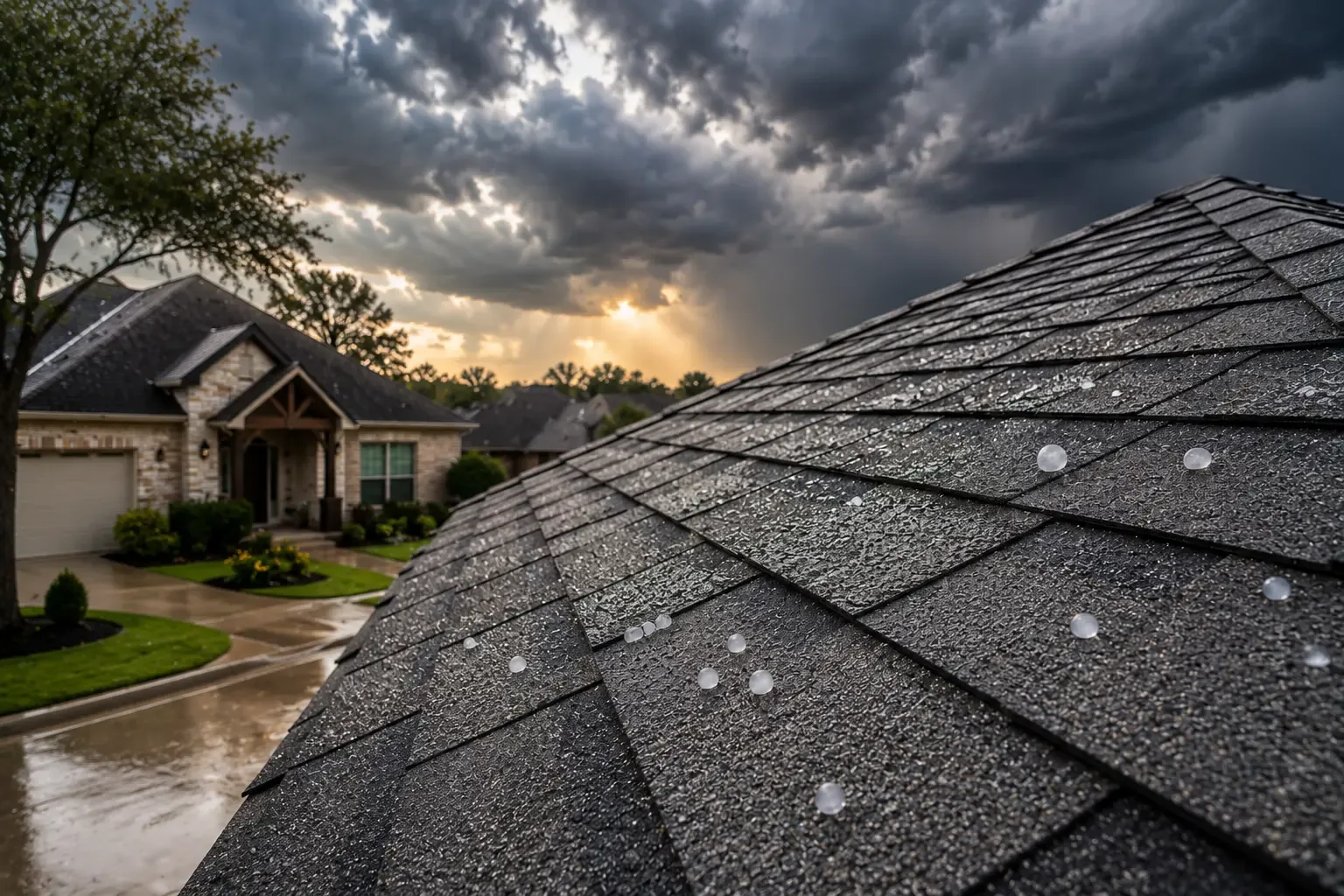
A roof leak in heavy rain is one of the fastest ways minor damage turns into a major repair bill. At Roof Ryders, we’ve spent more than nine years helping property owners across the greater Lufkin area handle exactly this problem. Heavy East Texas storms expose every weak point in a roof, from worn shingles to failed flashing. The good news is that most leaks follow predictable patterns. In this guide, we explain why roofs leak, what to do immediately, and when it’s time to call a professional.
Why Your Roof Leaks During Heavy Rain
Most roof leaks in heavy rain trace back to three issues: damaged roofing materials, failed flashing or sealants, and poor drainage. Wind-driven rain finds these weak spots and forces water where it doesn’t belong.
Common leak paths include missing or damaged shingles, cracked flashing around chimneys and vents, and worn sealant at roof penetrations. Clogged gutters can also push water back under the shingles. Sometimes attic condensation from poor ventilation mimics a leak, which is why a careful diagnosis matters more than a quick guess.
Emergency Roof Leak Steps to Take Right Now
When an emergency roof leak starts during a storm, focus on protecting your interior first. You can’t fix the roof safely in heavy rain, but you can limit the damage indoors.
Grab buckets or tubs to contain the water, and move furniture and electronics out of the way. Cover anything you can’t move with plastic sheeting. If you see a ceiling bulging with trapped water, carefully poke a small hole to drain it into a bucket, so the ceiling doesn’t collapse all at once.
Keep water away from outlets and fixtures. If moisture reaches electrical components, shut off power to the affected circuits and call a professional. Then document the damage with photos for your insurance claim before cleanup begins.
Temporary Fixes and Mistakes to Avoid
Temporary fixes buy you time, not a permanent solution. The goal is to slow the water until a professional can inspect and repair the roof properly.
From inside the attic, trace the water path back to its source. You can apply roofing tar, flexible sealant, or a small patch as a short-term measure. On the roof itself, only when it’s fully dry and safe, you can slip a rigid patch or plastic sheeting under the shingles. Always lap it downhill so water sheds off instead of pooling.
There are mistakes that turn a small problem into a dangerous one. Never climb a wet or steep roof. Don’t rely on caulk or tar as a permanent fix, and never ignore a leak that keeps coming back. Repeated leaks signal a deeper issue that needs a trained eye.
Professional Roof Leak Repair in Texas
Professional roof leak repair in Texas means addressing the real cause, not just the symptom. Our roofs here take a beating from hail, heat, high wind, and intense storms, so durable repairs matter.
At Roof Ryders, we commonly replace damaged shingles, flashing, pipe boots, skylight components, and underlayment. A full inspection tells us whether a localized repair or a partial or total replacement makes the most sense.
For properties in storm-prone parts of East Texas, we often recommend impact-resistant shingles, metal roofing, or high-performance underlayment. These upgrades cost more upfront but hold up far better through repeated heavy rain and hail. We serve both residential and commercial customers from our offices in Lufkin and Jasper. You can reach our team at callroofryders.com or by phone at 936-225-5571.
Protecting Your Property Through Every East Texas Storm
A leaking roof in heavy rain rarely fixes itself, and small problems compound fast. The reliable path is simple: contain the water, apply a temporary fix safely, then call a professional for lasting repair. Roof Ryders has protected Lufkin-area homes and businesses for over nine years, and we’re ready to inspect your roof and recommend the right solution. Call 936-225-5571 when the next storm rolls in.